
Doctoral Candidates Reflect on the HOMEDEM End Event
The HOMEDEM end event brought together researchers, practitioners, caregivers, and people with dementia for two days of exchange, reflection, and co-design in Hasselt. In this post, our doctoral candidates reflect on their presentations and workshops, sharing what they learned and how the experience shaped their ongoing research and practice.
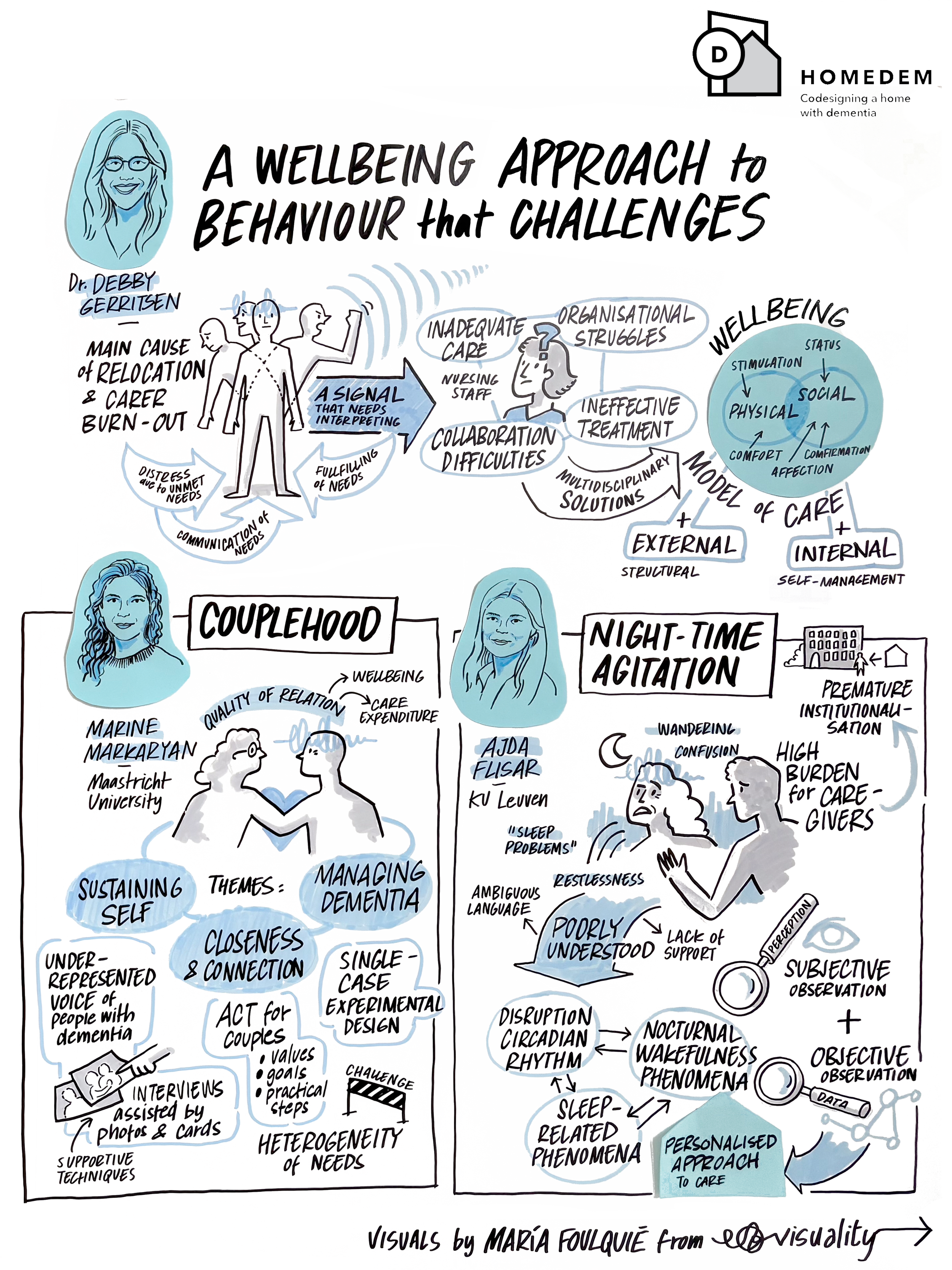
Ajda Flisar
"During my presentation, I shared insights into how we can improve understanding of nighttime agitation in dementia, a complex and often overlooked challenge for individuals and caregivers. Across four studies, I examined its conceptualisation and assessment, including caregiver experiences and sensor-based measures, highlighting key themes of recognition, assessment, and caregiver support to inform better dementia care."
"The workshop was a very rewarding experience, with engaged participants and open discussions about real-life challenges related to BPSD in dementia care. I focused on understanding nighttime disturbances, assessing patterns and triggers, and sharing practical strategies to support caregivers and care professionals. It was especially valuable to hear participants’ experiences and reflect together on how to provide more tailored, person-centred care while acknowledging the barriers caregivers and professionals face in daily practice."
Marine Markaryan
Marine's presentation started with a comprehensive overview of the needs among couples in which one of the partners is diagnosed with dementia. Those needs can be categorised into three clusters: 1) closeness and connection; 2) sustaining self (i.e., autonomy, identity, and agency) in a partner with dementia; 3) managing/ adapting to dementia. This was followed by introducing Acceptance and Commitment Therapy as an approach that Marine and her supervision team have been adapting to the context of interest. In her presentation, Marine has covered why this approach can be beneficial to couples, how it addresses the identified needs and fills in the gaps left by already existing interventions in the field.
"In our workshop, we practised one of the exercises from the support programme we developed based on Acceptance and Commitment Therapy. Three couples took part in this workshop. Running this workshop allowed us not only to identify limitations of the exercise, but also to see how relevant and valuable the chosen approach is for the couples who are willing to sustain their couplehood while navigating the challenges of dementia. Drawing on this experience, we adapted the therapy protocol to address limitations that became apparent during that workshop. We also learnt that the use of materials designed by Rising and Natsumi - the DCs from a design background - helps to make exercises highly engaging."
Rising Lai
"I began my presentation by linking 'food' and 'autonomy' as core concepts in person-centred dementia care. From there, I shared my research on how familiar objects in the living environment can be as mediators for mealtime activities, based on the theory of Material Engagement. I concluded my presentation by offering design recommendations to support interactions for people living with dementia, hoping to inspire the audience to consider these factors in their professional care practice or in their informal daily care with their loved ones."
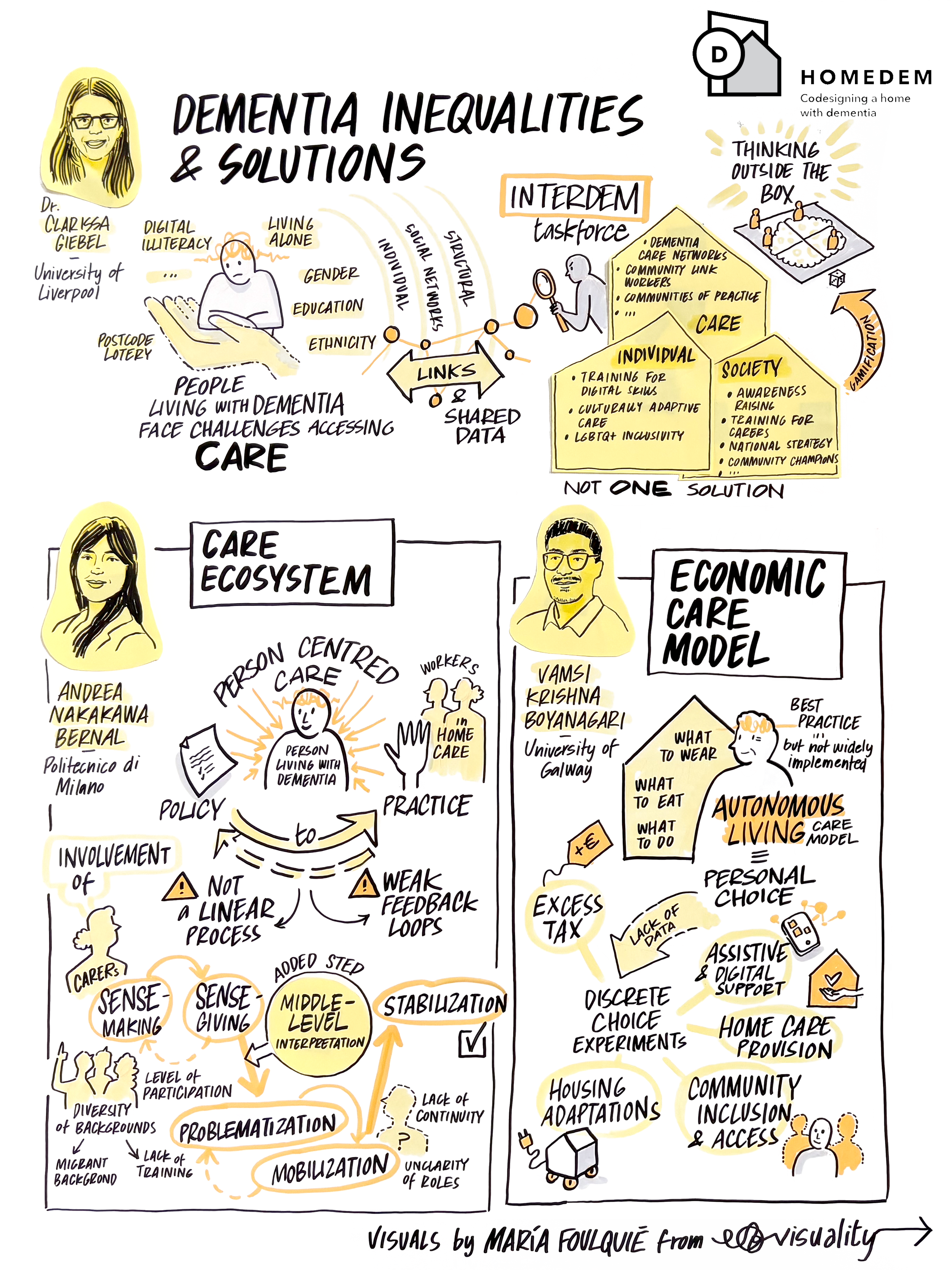
Vamsi Krishna Boyanagari
"My presentation, titled “Public Preferences for Autonomy-Enhancing Dementia Care in Ireland: Design of a Discrete Choice Experiment,” described the development of the Discrete Choice Experiment survey that forms the main empirical component of my research. The presentation focused on the development and refinement of the survey attributes and levels, together with the multi-stakeholder engagement process used throughout this work. I also presented preliminary findings from focus groups conducted with members of the Irish general public. These findings directly informed the selection and refinement of the final attributes and levels."
"The workshop was jointly facilitated with Sunny and Andrea. It provided a valuable opportunity to validate some of our emerging findings and explore potential recommendations for a future policy brief. During the workshop, we shared our collective understanding of social needs, key principles in dementia care and policy, and the needs and challenges facing the dementia care workforce. The discussion focused on interpreting local dementia care policies, understanding their relevance to our work, and identifying practical ways of translating policy principles into meaningful support for people with dementia. Participants included care staff, care coordinators, administrators, and a person receiving care. Their diverse perspectives supported a rich discussion and helped connect policy, practice, workforce experiences, and the lived experience of receiving dementia care. You can merge this information into Sunny and Andrea’s write-up if they have provided."
Andrea Nakakawa Bernal
"Policy translation and enactment are important spaces for intervention between policy formulation and frontline implementation. These processes are often overlooked. The presentation introduced a framework drawing on sensemaking and actor-network theory to examine barriers to policy enactment in the Swedish homecare context. It also explored how participatory service design can support actors in interpreting, negotiating, and translating policy intentions into everyday practice."
"During the session, we tested the design-led approach previously applied in the Swedish context. The workshop used co-creation in dementia care as a focal concept to identify existing practices, challenges, and concerns related to its implementation. As the workshop was conducted in Flemish, the local supervisory team provided facilitation support, while our direct role was more limited. Nevertheless, participants engaged actively in the activities, sharing their experiences and concerns and highlighting differences between the Flemish and Swedish contexts. The inclusion of both frontline professional caregivers and policymakers from the municipal and regional levels was particularly valuable, as it enabled participants to compare perspectives across different levels of the care system and discuss how policy intentions are interpreted and enacted in everyday practice. The session, therefore, helped identify key challenges in current processes of policy translation and enactment."
Together, the reflections demonstrated how dementia care is shaped across multiple interconnected levels, from the lived experiences of people with dementia and their caregivers to relationships, everyday practices, public preferences, and policy implementation. Across these perspectives, the workshops highlighted the value of participatory and design-led approaches in connecting lived experience with professional practice and translating dementia care principles into meaningful, context-sensitive action.
You can find all the end event-related documents here.